
My daughter recently turned eight, just weeks before her brother reached his sixteenth year. Their grandparents gave them a gift everyone would enjoy — two plane tickets to come spend time with them. For weeks, my daughter looked forward to this adventure with her beloved big brother. But as the weeks turned into days, the excitement mutated into anxiety: “Mommy, I can’t wait to go,” and “How many more days?” turned into “Mommy, I am scared,” and “Mommy, I am not sure I want to go.” I knew my daughter longed to go on this trip, and I felt confident she could handle the separation and would be in good hands with her brother and grandparents. Yet this adventure was stretching her attachment umbilical cord a bit more than was comfortable for her.
Before my immersion in Dr. Neufeld’s paradigm, I would have responded to her anxiety just as I see many of my clients responding to troubling feelings their children experience — resist them and try to make them go away. I would have distracted her from her fear and tried to convince her there was nothing to worry about, just as we try to convince our four-year-olds that there are no monsters under the bed.
We all know monsters aren’t real, but this obvious fact blinds us to the truth that the anxiety, which is giving birth to monsters, is very real. Rather than fight the external manifestation with logic that is ineffective because it doesn’t address the underlying emotional experience, we must instead make room for their feelings, no matter how challenging this may be for them, or for us.
In my daughter’s case, I first took time to engage her attachment to me, something Dr. Neufeld calls collecting a child. Then I put warmth and acceptance in my voice and helped name the fears: that her big brother wouldn’t look after her, that she wouldn’t be able to sleep without me nearby, that she was going to miss me, that, very simply, she felt scared. In the context of the safety that our relationship provides for her, those anxieties melted into tears.
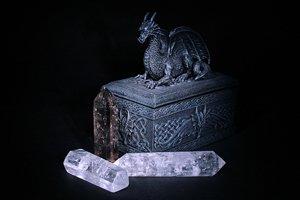
Supporting her to feel these fears, rather than fight against them, made the feelings less threatening and ultimately helped her face the dragons that stood in the way of her treasure. My daughter did go visit her grandparents, and her experience was authentic, ambivalent, and successful; she had a wonderful time, and her heart stayed soft. Even so, each night at bedtime, the monsters still came, and I was called upon to help her find her tears and her courage.
What I did for my daughter is similar to something I aim to provide for my adult clients: a safe space to feel the vulnerable feelings that are an inevitable part of being human. When we have what we need to experience life fully, we discover that even though it is difficult and uncomfortable to bear vulnerable feelings, we can indeed survive the experience. In so doing, we become changed by that which we cannot change, a deeply transformative process Dr. Neufeld calls Adaptation: one of three processes of maturation he discusses in depth in his DVD Helping Children Grow Up. This process is what delivers a resilient and resourceful human being, one who is not determined by their fears but rather grows in facing them.


