
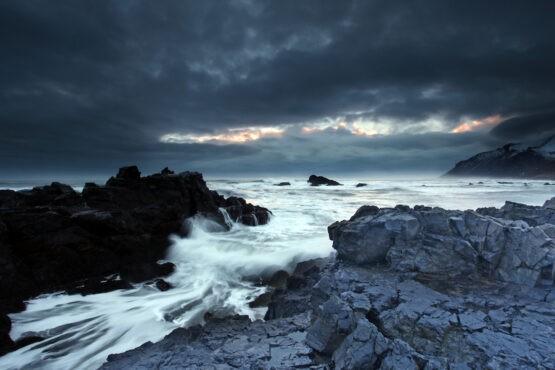
I was recently fortunate enough to take a solo trip to the West Coast of Vancouver Island — the land of ancient cedars and shore pine bogs, long stretching beaches, and the mighty Pacific Ocean with its endless horizon and powerful waves. One afternoon on this trip, in a particularly reflective place, I found myself at the ocean’s edge contemplating loss; how it surrounds us, how ubiquitous it is. And how, despite its inevitability, there seems to be so little room, space, and permission in our society to feel and grieve our losses, large and small. There is so much pressure to "get over it" or "on with it," to simply adjust, ignore, or focus on the positives, completely eclipsing the crucial role that feeling our losses and missing plays in human adaptation.
There, on the beach that day, the tears came for me in a deluge; at first over a little specific loss, but expanding outwards until I felt as though I was weeping for all that had ever been lost and all that ever would be lost, all at once. There is something about where ocean meets the shore that has always provided the best accompaniment for the melancholy in me. As a teenager, I clearly remember gravitating to the beach, unsure exactly why, only to find that, once sitting with those ocean waves, the waves of sadness would also come. For me, the power and vastness of the sea and its saltwater spray seems to beckon my saltwater tears.
That particular day, lost in my own sea of tears, I happened to look up and notice a young child, weary-seeming mother in tow, gleefully running towards the ocean’s edge, radiating delight. In full explorer adventure mode, stones were upended, magical creatures uncovered, seaweed "pets" pulled up and down the beach, sandpipers chased. I am perpetually astounded by the abandon with which young children can throw themselves into play.
After observing this young child for some time, running, and jumping, shrieking, and exploring, absorbed completely in the magic of our surroundings, I noticed that a brand-new project was coming to life: an elaborate sandcastle was now in the making. Isn’t that appropriate, I thought to myself.
Sandcastles hold a particularly important place in my heart. To me, sandcastles have always been such a perfect prototype for loss. No matter how magnificent the castle or creation, no matter how much time and effort and passion you put into its construction, there is one reliable inevitability — it will not last! It will eventually be washed away or swallowed up back into the sea. Does that mean we don’t build them? Certainly not. We continue our efforts, creating our masterpieces and then giving them back to the sea, playing, in our own way, with inevitable loss.
I was delighted, watching this particular child so deeply engrossed in the engineering feat that was this magnificent castle, with its moat and towers and seashell decorations. And then, I saw it coming. From seemingly a mile away. A rogue wave — much bigger than the rest, arriving much sooner than expected from the incoming tide. And, sure enough, in an instant, the wave careened up to that sandcastle, mercilessly knocked it down, and washed it away in one fell swoop, almost as if it never was. The startled child let out the most enormous wail, as their carefully constructed palace was utterly destroyed in front of their eyes. Almost immediately, the child’s mother picked them up, and in an exasperated tone, scolded, “If you are going to be like this, we are going home. The beach is no place for tears!”
Now, just because the beach is my place for tears certainly does not mean that it has to be the place for everyone! But in that moment, I found myself left with a deep yearning; for that particular child on that day, for their mother, and for all of us. That we may find places and moments to feel our losses, and to cry about our sandcastles that once were …
Editor's note: To hear more from Genevieve on the theme of sadness, you can view her breakout session recording, Ode to Melancholy, from the 2021 Neufeld Institute Conference


