
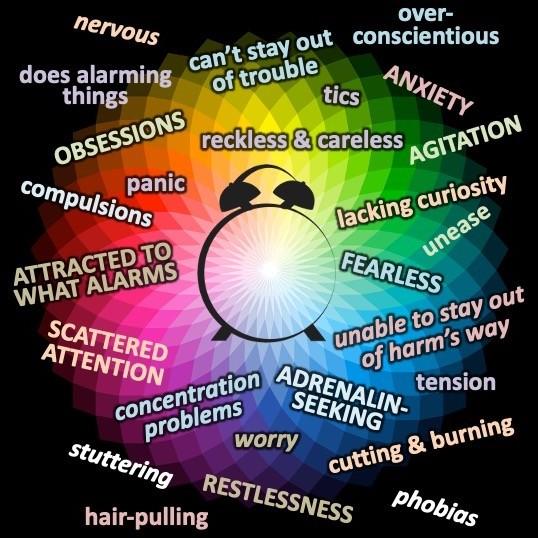
What do anxiety, attention problems, bullying, and adrenaline-seeking all have in common? Although these stories all seem to be coming from a different place, there is a shared thread between them … stay with me ...
The cyber-bully dynamic
My first assignment as a school counsellor, almost 20 years ago now, was an incident of cyber-bullying. It was the first time something like this had happened at this small private school, and they were understandably alarmed. That is, the teachers and the parents were alarmed; the children themselves did not appear to “feel” much at all. The adults were flummoxed, not having experienced anything like this before. Bullying itself, however, was nothing new. The move to online just allowed more anonymity and a wider-spread reach, but the bully dynamic itself — a defense against caring feelings, matched with an instinctive move to now exploit (versus protect) those with any perceived weakness or vulnerability — was the same. Twenty years later, the story hasn’t changed much — this tragic dynamic is alive and well both on and offline.
Attracted to what alarms
Around the same time, I was seeing a teenage boy in my private practice who was sent to me by his concerned parents. He had stopped talking to them in person and would only communicate through email; in fact, his only connection to others was through MSN (which you may remember was the precursor to Facebook), where he had gathered a small group of “friends” whom he had never met. One day, when he was “blocked” by one of these said friends, he went into a spiral of suicidal ideation. Why did it matter so much? What was happening? This young man mostly presented in an agitated state, wringing his hands together, his legs pulsating up and down under the table, unable to focus. But sometimes, he came in cool as a cucumber, describing expressionlessly his latest adventure through the (then) fairly new “jackass” movement where you do death-defying stunts, like jumping in front of trains, for the adrenaline rush of it. He clearly wasn’t feeling his alarm, but his body was telling a different story.
Scattered attention
Some years later, I remember working with a boy of about eight years old who couldn’t sit still to save his life. He was constantly moving, fidgeting, and unable to pay attention in class. His teacher and his classmates found him annoying and disruptive; I could see their point. But in delving a bit further, I came to learn that he was an international student, living apart from his mother for a year to have an opportunity for a good education. He was still so young and it was overwhelming for him to be so far away from his home base. Once I heard the story behind his attention problems, it brought me more compassion for what he was experiencing.
Anxiety
As a parent, I went into labour with my second child on the morning of September 11, 2001. It did not feel like a good day to bring a child into the world, what with the alarm coursing through me. My own alarm managed to prolong the birth for a few days, but when my daughter finally came into the world, her anxiety was palpable. She needed to be with me (in sight, in smell, in touch) at all times or she would start to hyperventilate. This was how her story started.
A common root
What do all these stories have in common? We have to go a bit deeper to find the root that is common to us all … our alarm system. When we can see how the alarm system is meant to work and what can happen when we are under threat (actual or anticipated), as well as the interplay with our other systems of emotion, attention, and defense, a clearer picture emerges. It is this clearer picture, when the dots are joined, that gives us the insight we need to take action.
The alarm spectrum course
I am excited to share this material that my father, Gordon Neufeld, brought together at the beginning of the pandemic as a working model of alarm. In addition to his lectures, I will be weaving in my own stories and experiences as a parent, therapist, and educator. We will also explore the impact of technology, in particular the growing trends in our young people of screens and social media, on our alarm system.
This course very much normalizes the alarm that we all have and helps us to understand where we can get stuck, and where our defenses come into play, creating a spectrum of alarm-based responses — from the relatively benign to the debilitating and disturbing. This has been a topic close to my heart for decades now, both personally and professionally, and it continues to be relevant in the context of the restless world we live in today.
I hope you will join me for the journey as we explore how to put these insights into action as adults who care for children, whether you are a parent, grandparent, educator, helping professional, or simply a human being experiencing alarm. I look forward to exploring this very timely subject with those who are in for the ride!


