
Neufeld logo + statement - light
⌘K
Events Classes
CAMPUS
aAbout
dDr. Gordon Neufeld
wWho We Are
oOur Approach
lLanguage Programs
fFAQ
cContact Us
oOur Newsletter
sSupport Our Mission
oOur Parent Education
sSupport for Practitioners
pProfessional Support for Parents
No results
cCourses
cCourse Catalogue
aAbout our Courses
cCampus Member Centre
sSupport Centre
sSleep Studies
eEvents
cClasses
oOur Team
mMeet Our Team
aAdministrative Staff
eEnglish Program Faculty
lLanguage Program Directors
oOnline Parent Consultants
cCourse Support Team
cCourse Facilitators at Large
aAdjunct & Associate Faculty
pProfessional Associates
No results
rResources
bBooks
eEditorials
rRecordings: Webinars & Conferences
fFree Resources
iIDEA Centre for Educators
sScientific Research Centre
sSee all resources
CAMPUS
Back

The Power of Attachment

Patti Drobot
Mar 11, 2011

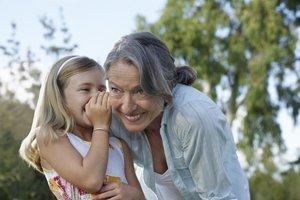
Recently, my dear friend’s grandmother died at 96. I didn’t know much about “Gransie” except for the fact that my friend Karin kept in close contact with her, often visiting and taking her out to dinner with the family. My only thought about this woman I had never met or known was: I hope I have a granddaughter who is so loving and attentive if I am lucky enough to live that long. And of course, the question arises, “What does one have to do to hold on to their children, grandchildren, and great-grandchildren throughout the course of their lifetime?”

I got my answer when I attended Gransie’s funeral. In the synagogue that afternoon of the service, I witnessed several generations weeping openly, telling stories, and sharing their loss as they paid tribute to a woman who quite obviously and instinctively knew what attachment and connection were all about. I watched my friend grieving in deep sorrow, alongside her children, her father and mother, aunts, uncles, cousins, nieces, nephews, and great-grandchildren — people young and old, ranging in age from 7 to 70, and beyond. A woman beside me remarked at how difficult it was to see the little ones so sad. I said, “No, it’s wonderful. What an amazing attachment she has cultivated.”

What was clear to me was that Gransie lived her life with a huge heart, putting relationships and family first. In the days following, I asked Karin what made her grandmother so special. What kept the connection so strong? I found some things out.

She collected everyone, all the time. She cursed the answering machines, always demanding a real voice. She sent birthday cards and letters to every niece, great-niece, and grandchild, and made sure they left with packages of Hungarian cabbage rolls and cakes after visits with her. This was how she continued to nourish them even when apart from her. She made everyone feel special, always welcoming new family members and in-laws with open arms and a message of “what is mine is yours … let me make you feel taken care of.” She never forgot a promise for a visit or a dinner out. In my friend’s words, “She made me feel safe. She was in charge, and I could go to her with anything … any worry, sadness, concern … she could handle it, take it all in, and give me a sense that everything would be okay. I could hand my problems over to her, and rest knowing she would take care of me. Even her house, her bathroom, her clothes … they reminded me of what she stood for and I found comfort in everything that was hers.”

Karin’s grandmother had what is called a strong “alpha presence.” She was amazingly caring and soft-hearted. And she was bossy, feisty, spoke her mind, and didn’t take any guff. She suffered great loss and tragedy in her life, but came through with resilience. Her message to her loved ones was: “Bring it on. I can take it. I will take care of you.”

I am reminded of Dr. Neufeld’s powerful description of the deepest attachment possible with another: the attachment that invites another to be fully known and understood, that invites all parts in … not just the good, but also all the worries, the sadness, the confusion, the anger — the vulnerability that makes us fully human. This kind of connection doesn’t go away. Even after her death, Gransie will always be there to guide and influence Karin for the rest of her life. That is what deep attachment is about. It’s forever.

Previous Shame
Next Attachment Hunger

Upcoming Scheduled Classes

Some of our courses are also offered as scheduled classes from time to time with our Faculty providing weekly live special support sessions. If you already have taken the course in its self-paced version, you can enrol in the scheduled class for a fee of only 50 CAD.

ready to enrol

Making Sense of Marriage

Classes Start: September 16, 2026

Wednesdays 10:00AM – 11:00AM Vancouver

Runs for 10 weeks

With Michele Maurer and Lisa Weiner

$350 CAD

Fresh understandings of marriage come from viewing the coupling phenomenon through the lenses of attachment, emotion, and development.

more about this CLASS
ready to enrol

Neufeld’s Model of Attachment

Classes Start: October 1, 2026

Thursdays 9:30 AM Vancouver

Runs for 5 weeks

Anchored by Dr. Urška Žugelj with team of four other Faculty psychologists.
Gordon Neufeld will also be joining for a bonus session regarding Attachment Styles.

$150 CAD

This course unfolds Neufeld's ground-breaking model of attachment — the result of decades of synthesis, inspired by the physical and natural sciences, and built upon the most recent understandings of the brain, emotion and development.

more about this CLASS
ready to enrol

Intensive I: Making Sense of Kids

Classes Start: October 9, 2026

Fridays 12:30PM – 01:30PM Vancouver

Runs for 22 weeks

Anchored by Karen Bollman

$650 CAD

Intensive I provides the conceptual foundations of Neufeld's approach. Participants are equipped to use the constructs of attachment, maturation, and vulnerability to view children and their problems three-dimensionally.

more about this CLASS
ready to enrol

Intensive II: The Separation Complex

Classes Start: October 15, 2026

Thursdays 11:00AM – 12:30PM Vancouver

Runs for 17 weeks

With Genevieve Schreier

$800 CAD

Building on Intensive I, this course sheds light upon the impact of separation on a child's personality and behaviour. When the developmental antecedents are understood, the path to effective intervention becomes clear.

more about this CLASS
ready to enrol

Making Sense of Aggression

Classes Start: October 23, 2026

Fridays 10:00 – 11:00 AM Vancouver

Runs for 6 weeks

With Heather Ferguson joined by special guest Gordon Neufeld

$175 CAD

Aggression problems are deeply rooted in instinct and emotion and are therefore resistant to conventional discipline practices. Dr. Neufeld uncovers these roots and outlines steps to addressing them.

more about this CLASS
more about SCHEDULED CLASSES

Stay Connected with the Neufeld Institute

Sign up for our newsletter to receive insights, editorials, and updates on new courses, webinars, and scheduled classes—all rooted in the Neufeld approach. Whether you're a parent, educator, or professional, our resources are here to help you make sense of the children in your care.

Neufeld logo + statement - light
The Neufeld Institute is a registered Canadian charitable organization under the name Neufeld Institute Foundation and is also registered as a NPO in British Columbia.
2155 West 36th Avenue
Vancouver, BC V6M 1L3
Canada
Courses & Events
Course Catalogue Scheduled Classes Events Programs in other languages
The Neufeld Institute
See Our FAQ Contact Our Office Our Administrative Team Neufeld Institute Faculty Parent Consultants Get Our Newsletter Support Our Mission Hold on to Your Kids
Policies...
Data Protection Policy Terms and conditions
Copyright © 2026 Neufeld Institute