
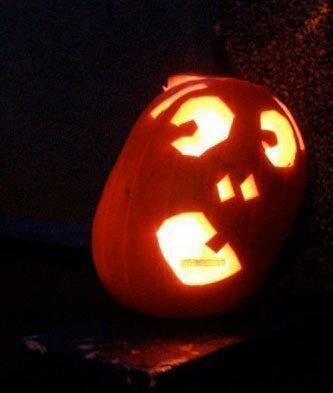
Halloween, of all our traditions, has a visceral feel of tapping into something very deep in our psyche.
I am going to talk about fear.
There comes a day when a young child suddenly realizes that bad things can happen to those he or she is attached to. Something might have already happened, such as grandma getting sick. Or the child may just have come to the age where they can anticipate a distressing event.
Insulating a child from these fears is futile. When their fears start to take imaginative form, as in monsters under the bed, or fixations such as spiders, confronting the irrationality of these fears is equally futile.
The existence of alarming feelings in our children informs us that something is scaring them. If it is fear that something terrible could happen to mommy or daddy, for instance, this is going to be too much to look at directly; the alarm will dive under consciousness, surfacing only in feeling unsafe. It is this vague feeling of alarm that fuels the imagination into thinking that there are creepy and scary things lurking in the shadows. You perhaps will recognize this as the classic description of anxiety, i.e., a vague and yet pervasive feeling of alarm without a specific cause associated with it.
So, how to deal with a fear that is too intense to be encountered in its raw form? We all want our children to feel as safe and free from anxiety as possible. Fortunately, one doesn’t have to confront the irrationality of a child’s fears or even unearth the particular cause to help them deal with their feelings of alarm.
The answer is in play!
Play is the place where reality is suspended, where things can be practiced with no consequences (i.e., no bad things can happen), and where roles can be reversed.
So, first, what elements of Halloween capture the essence of frightening things?
The mask — neurological studies of the emotional brain show us that we have an instinctive stress reaction, that is, the classic fight-or-flight response, to fierce or angry expressions. Even infants, by six to seven months of age, develop an innate sensitivity to strangers, protesting their presence. Similarly, a lack of warmth in eye contact or a mask-like facial expression triggers alarm in all of us, no matter what our age.
Then there are the sounds and sensations that cause a primitive reaction. The dark, loud noises, unexpected tickling sensations on our skin, and being startled by something without warning are all stressful to the brain and cause it to send warning alert signals to the consciousness.
Add to this list the sight of blood, of wounds, of the pallor and coldness of death. Some of these references are cultural, but many are visceral and common to all humans.
At Halloween, children experience all these things in a play context — those we know become strangers by donning masks or costumes, and we go out in the dark to spooky houses to knock on doors. Children have great fun being the ones to become scary, and they get a great thrill when a scary mask comes down to reveal a familiar, safe face — when the door of the house opens to reveal delighted friends giving treats and perhaps play-acting at being scared!
Of course, playing with fear is risky business; it can easily become too much to bear for a child. The essence of the experience is that even in the extravagance of the play-acting, there must be a surety that home is the safe place. This calls for a sensitivity in the parent to each child’s threshold of how much is just enough to cause a thrill in the context of safety, but not too much to fuel a nightmare.
I wish you all a great playful spooky night!


