
Neufeld logo + statement - light
⌘K
Events Classes
CAMPUS
aAbout
dDr. Gordon Neufeld
wWho We Are
oOur Approach
lLanguage Programs
fFAQ
cContact Us
oOur Newsletter
sSupport Our Mission
oOur Parent Education
sSupport for Practitioners
pProfessional Support for Parents
No results
cCourses
cCourse Catalogue
aAbout our Courses
cCampus Member Centre
sSupport Centre
sSleep Studies
eEvents
cClasses
oOur Team
mMeet Our Team
aAdministrative Staff
eEnglish Program Faculty
lLanguage Program Directors
oOnline Parent Consultants
cCourse Support Team
cCourse Facilitators at Large
aAdjunct & Associate Faculty
pProfessional Associates
No results
rResources
bBooks
eEditorials
rRecordings: Webinars & Conferences
fFree Resources
iIDEA Centre for Educators
sScientific Research Centre
sSee all resources
CAMPUS
Back

The Two Essential Invitations

Lisa Weiner
Mar 11, 2021

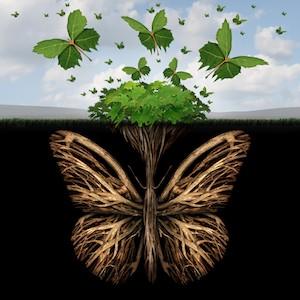
Dr. Neufeld says that we need to offer our children two invitations. The first is the unconditional invitation to exist in our presence, and the second is the invitation to become fully who they are. This same sentiment is sometimes represented imagistically: we are helping them grow both roots and wings. 

Some parents find it natural to extend the invitation for deep, dependent relationship: “Your problems are my problems,” “there is nothing you bring here that is too much for me,” and “let me help you find a way,” capture the essence of this invitation. Others naturally invite a child to become who they are: “Let’s see what you create!”, “Oh, that is an interesting way to look at that — tell me more,” and “I can see why you don’t like that” are phrases that welcome individuation. For most of us, one of these sets of phrases comes more naturally than the other. It is part of our growth as parents to find both invitations inside ourselves so that we can extend them to our children.

As they grow, children shift between these two drives — to attach and to individuate — day-to-day and, sometimes even, moment-to-moment. We can see these polarities most strikingly in our toddlers and our teenagers, as both are times in life when integrative functioning capacity — the ability to hold two opposing feelings at the same time — is low. I remember vividly my two-year-old son insisting on dressing himself — slammed drawers and shouts could be heard through the closed door of his room — only to slip and fall on our walk 20 minutes later and want to be carried and sung to. 

I am reminded of this toddler time when my other son, now 16, excitedly tells me about the gap year he is planning — biking and birding solo across our home state of Oregon — just before I tuck him into bed where he loves hearing the same song I’ve been singing to him at bedtime his whole life. Deep attachment fuels the drive towards individuation and, after some time spent in individuation mode, our kids (be they toddlers, teens, or in-between) need to “fuel up” with attachment once again.

As always, being the parent our child needs calls forth the best in us, propelling us forward in our own development. We are called to access our own integrative functioning, our own power to gracefully both welcome dependence and celebrate independence back and forth, again and again, as we support our children in their healthy maturation. 

One or both of these needs in our children may stir us up. For some, the preschooler who wants to be carried all day may bring us face-to-face with our frustration. For others it could be the “do it myself!” insistence of the toddler (or teen!) that tries our patience. As always in parenting, when our own feelings get big we need to find outlets for emotional expression (be it journaling, kickboxing, or listening to melancholy music). That way, we can provide both the fertile soil that our children need to root in and the celebration and appreciation of their unfurling wings.

Previous Playing with Alarm
Next Where Has My Sweet Child Gone?! The Challenge of Holding On to Our Young Teens // Robin Brooks-Sherriff

Upcoming Scheduled Classes

Some of our courses are also offered as scheduled classes from time to time with our Faculty providing weekly live special support sessions. If you already have taken the course in its self-paced version, you can enrol in the scheduled class for a fee of only 50 CAD.

ready to enrol

Making Sense of Marriage

Classes Start: September 16, 2026

Wednesdays 10:00AM – 11:00AM Vancouver

Runs for 10 weeks

With Michele Maurer and Lisa Weiner

$350 CAD

Fresh understandings of marriage come from viewing the coupling phenomenon through the lenses of attachment, emotion, and development.

more about this CLASS
ready to enrol

Neufeld’s Model of Attachment

Classes Start: October 1, 2026

Thursdays 9:30 AM Vancouver

Runs for 5 weeks

Anchored by Dr. Urška Žugelj with team of four other Faculty psychologists.
Gordon Neufeld will also be joining for a bonus session regarding Attachment Styles.

$150 CAD

This course unfolds Neufeld's ground-breaking model of attachment — the result of decades of synthesis, inspired by the physical and natural sciences, and built upon the most recent understandings of the brain, emotion and development.

more about this CLASS
ready to enrol

Intensive I: Making Sense of Kids

Classes Start: October 9, 2026

Fridays 12:30PM – 01:30PM Vancouver

Runs for 22 weeks

Anchored by Karen Bollman

$650 CAD

Intensive I provides the conceptual foundations of Neufeld's approach. Participants are equipped to use the constructs of attachment, maturation, and vulnerability to view children and their problems three-dimensionally.

more about this CLASS
ready to enrol

Intensive II: The Separation Complex

Classes Start: October 15, 2026

Thursdays 11:00AM – 12:30PM Vancouver

Runs for 17 weeks

With Genevieve Schreier

$800 CAD

Building on Intensive I, this course sheds light upon the impact of separation on a child's personality and behaviour. When the developmental antecedents are understood, the path to effective intervention becomes clear.

more about this CLASS
ready to enrol

Making Sense of Aggression

Classes Start: October 23, 2026

Fridays 10:00 – 11:00 AM Vancouver

Runs for 6 weeks

With Heather Ferguson joined by special guest Gordon Neufeld

$175 CAD

Aggression problems are deeply rooted in instinct and emotion and are therefore resistant to conventional discipline practices. Dr. Neufeld uncovers these roots and outlines steps to addressing them.

more about this CLASS
more about SCHEDULED CLASSES

Stay Connected with the Neufeld Institute

Sign up for our newsletter to receive insights, editorials, and updates on new courses, webinars, and scheduled classes—all rooted in the Neufeld approach. Whether you're a parent, educator, or professional, our resources are here to help you make sense of the children in your care.

Neufeld logo + statement - light
The Neufeld Institute is a registered Canadian charitable organization under the name Neufeld Institute Foundation and is also registered as a NPO in British Columbia.
2155 West 36th Avenue
Vancouver, BC V6M 1L3
Canada
Courses & Events
Course Catalogue Scheduled Classes Events Programs in other languages
The Neufeld Institute
See Our FAQ Contact Our Office Our Administrative Team Neufeld Institute Faculty Parent Consultants Get Our Newsletter Support Our Mission Hold on to Your Kids
Policies...
Data Protection Policy Terms and conditions
Copyright © 2026 Neufeld Institute